No day of the week sets aside the waterfowl hunt area at Lee Metcalf National Wildlife Refuge for people who only want to watch birds. Monday and Thursday come closest, because waterfowl hunting closes in that area on those two days. The same federal rule that closes it also opens it to archery deer hunters on those days.
So the refuge just north of Stevensville runs on two calendars at once. One belongs to swans, hawks and winter water birds. The other comes from the regulations covering duck, goose and coot hunting. Montana Fish, Wildlife & Parks set the Pacific Flyway duck, coot and goose seasons at Oct. 3 through Jan. 15, and FWP's map puts Ravalli County in the Pacific Flyway. Through mid-January, then, the hunting calendar decides which parts of the refuge are for watching birds and which days the hunt area will have hunters in it.
The Rule at the Parking Lot
Federal law spells out the refuge's hunting rules in 50 CFR 32.45, the Montana section of the refuge hunting regulations. One line in the Lee Metcalf entry applies directly to anyone carrying binoculars:
We prohibit wildlife observation, scouting, and loitering during waterfowl hunting season at the waterfowl hunting area parking lot and on the refuge road leading to the waterfowl hunting area parking lot.
The rule doesn't skip any days. It covers the whole season, every day of the week, which this year means through Jan. 15. The archery deer rules add a similar ban on wildlife observation, scouting and loitering at the access points and parking areas for that hunt.
The rest of the rules explain why those lots stay busy. The refuge's hunting page says hunters must enter and leave the waterfowl area through its parking lot, and that all entry to hunting areas goes through designated hunter-access parking. Waterfowl hunters can arrive up to two hours before legal shooting hours and must be out within two hours after. They must hunt from an established blind, no more than four people can use a blind at once, and each hunter sets a metal flip tag on the blind selector before and after hunting. Nobody can hold a blind by leaving a vehicle in the lot. The exceptions are blinds 2 and 7, which can be reserved for hunters with disabilities. Pre-dawn arrivals, required entry points and no saved spots all add up to a parking lot that exists to get hunters in and out. That's the reason the rule keeps watchers somewhere else.
This is general information and not legal advice. The refuge office has the final word on how these rules apply on a given day.
Monday and Thursday Still Have Hunters
Mondays and Thursdays look like the quiet days. The regulation closes the waterfowl hunting area to waterfowl hunting on both. During waterfowl season, though, it also allows archery deer hunting in that same area on exactly those days. Put the hunt rules next to the visitor center schedule and the refuge's week looks like this through Jan. 15:
| Day | Waterfowl hunt area | Visitor center |
|---|---|---|
| Monday | Closed to waterfowl hunting, open to archery deer hunting | 8 a.m. to 4:30 p.m. |
| Tuesday | Waterfowl hunting | 8 a.m. to 4:30 p.m. |
| Wednesday | Waterfowl hunting | 8 a.m. to 4:30 p.m. |
| Thursday | Closed to waterfowl hunting, open to archery deer hunting | 8 a.m. to 4:30 p.m. |
| Friday | Waterfowl hunting | 8 a.m. to 4:30 p.m. |
| Saturday | Waterfowl hunting | 8 a.m. to 4:30 p.m. |
| Sunday | Waterfowl hunting | Closed |
The visitor center also closes on federal holidays, so it's dark on Thanksgiving, Thursday, Nov. 26. The refuge grounds are open year-round from sunrise to sunset, and that includes Sundays and holidays. Saturday is the only weekend day this season when the visitor center is open and waterfowl hunting is underway at the same time.
Where Watching Is the Whole Point
All of this narrows the map to a few places built for watching. The refuge's rules and policies page names two public-use areas, the Wildlife Viewing Area and the Kenai Nature Trail. Its wildlife watching page lists four spots: the Wildlife Viewing Area, the headquarters and visitor center area, the Kenai Nature Trail, and Wildfowl Lane, the county road that runs through the refuge. The same page says the refuge holds about 1,000 acres of palustrine wetlands, more than 20 percent of those in the Bitterroot Valley.
Here's how each one fits the season:
- Kenai Nature Trail. The trail runs 1¼ miles north from refuge headquarters, near Pond 2 on the refuge map. The refuge's hunting and fishing brochure says the trail is open dawn to dusk and asks visitors to stay on it and use caution during hunting season.
- Wildlife Viewing Area. The refuge map shows it as its own area, separate from the waterfowl hunt area and the hunter-access parking.
- Refuge headquarters and the visitor center. FWS calls the visitor center a hub for interpretation and education, and volunteers help staff it.
- Wildfowl Lane. It's a county road through the refuge and appears on the refuge map apart from the hunt area.
FWS also says public areas may close temporarily for management work. If you're bringing out-of-town guests on a weekend, it's worth checking the refuge page or calling the visitor center before a Saturday visit.
What the Season Brings In
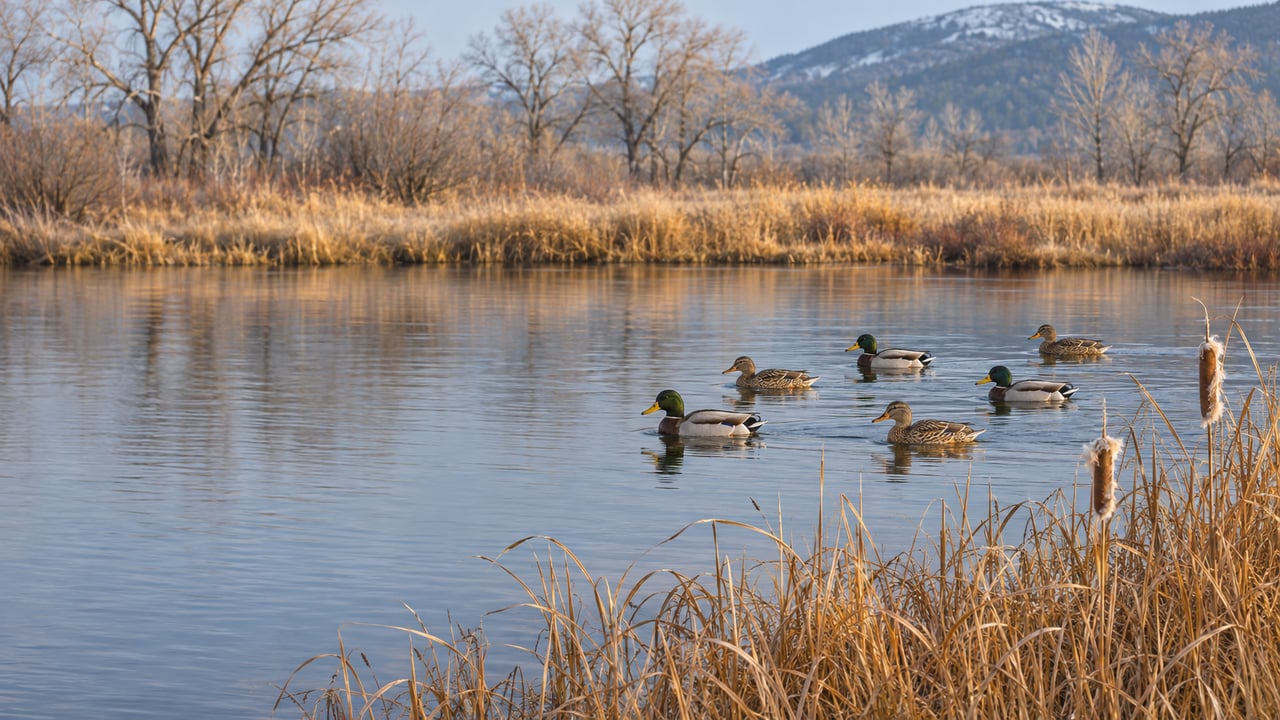
The overlap exists because the birds and the hunt follow the same season. On its species page, FWS calls winter birding at Lee Metcalf especially good for birds tied to water, which is the same group the waterfowl season is built around. The refuge lists trumpeter and tundra swans as stopover species. In the uplands, away from the ponds, it names red-tailed and rough-legged hawks among the raptors that use the refuge.
That split works in a walker's favor. Hawks hunt over the uplands, and the trail and viewing area put people beside water without going near the hunt-area lot. Late in the year, the refuge's list of species becomes something people count by name.
The Count That Lands Inside Duck Season
FWS reports that the Stevensville Christmas Bird Count has recorded more than 55 species on the refuge in recent years. The count goes back decades. In 2023, KPAX reported on the 59th annual Stevensville count, with dozens of people spread around Stevensville early in the morning and each counter paired with a partner. The count's compiler told KPAX the day is about more than data:
"It's also about getting to know your neighbors and other people who are interested in birding and it's just a fun activity to share, bird watching is becoming more popular and it really allows a person to take some quiet time in their day and to walk slowly and really observe and listen to what's out there."
The Bitterroot Bird Alliance says its members coordinate both the Stevensville and Hamilton counts, and it asks prospective participants to check its December calendar for dates. Last season's Stevensville count was Saturday, Dec. 27, 2025. Participants met at 7:30 a.m. at the Stevensville Ranger Station, 88 Main Street. There was no group lunch, so counters brought their own food and reported results by email or phone.
Any count date between now and Jan. 15 falls inside the waterfowl season. The two calendars run side by side on count day too, so the parking-lot rule and the Monday and Thursday archery days apply to counters just as they do to anyone else on the refuge.
Planning the Rest of the Season
Your first stop sets the route for the rest of the visit. Here's one that keeps you clear of the hunt rules:
- Start at refuge headquarters. Monday through Saturday, the visitor center is open 8 a.m. to 4:30 p.m.
- Walk the Kenai Nature Trail north from headquarters and stay on the trail.
- Use the Wildlife Viewing Area and Wildfowl Lane for watching the ponds and uplands.
- Don't stop to watch at the waterfowl hunt parking lot or on the road to it on any day until the season closes Jan. 15.
- In December, check the Bitterroot Bird Alliance calendar for the Stevensville count.
The Pacific Flyway duck, coot and goose seasons close Jan. 15, and with them the parking-lot ban and the Monday and Thursday archery days in the waterfowl area.
Jani's family has spent five generations in the Bitterroot, through more duck seasons and Christmas counts than anyone has kept track of, and that local knowledge carries into every property she represents near the refuge and Wildfowl Lane. If you own land near Stevensville and want to know what it's worth this winter, Montana Homes by Jani can start with an instant home valuation.